





How to Choose the Right Automotive Seat Frame Manufacturer for Your Next Project
Why Seat Frame Quality Matters More Than You Think
When engineering teams evaluate automotive seat frame manufacturers, the conversation often starts with price and lead time. But experienced procurement managers know that seat frame quality is one of the most consequential decisions in the entire seating system.
A seat frame isn’t just a structural component. It’s the load-bearing backbone that protects occupants in a collision, the precision-machined foundation that allows recliner mechanisms to function smoothly, and the thermal management surface that interacts with occupant comfort systems. A substandard frame — even one that looks acceptable — can cause warranty claims, recalls, and damaged OEM relationships.
That’s why procurement teams at major automotive suppliers and vehicle manufacturers are increasingly moving away from cost-first supplier selection. They’re asking different questions: Who has IATF 16949 certification? Who has documented PPAP processes? Who has experience with your specific application — passenger car, commercial vehicle, UTV, or ATV?
What Sets a Professional Automotive Seat Frame Manufacturer Apart
Not all seat frame manufacturers are created equal. Here’s what to look for:
Material expertise. Quality manufacturers work with multiple steel grades and aluminum alloys. They understand how material selection affects weight, strength, and corrosion resistance. If you’re building seats for an off-road vehicle, you need different material specs than someone building for a luxury sedan.
Process capability. Stamping, welding, and finishing are core competencies. Look for manufacturers with in-house stamping lines, robot welding cells, and automated finishing processes. Outsourcing any of these steps introduces quality risk and communication lag.
Certification and compliance. IATF 16949 certification is the baseline for automotive seating suppliers. Beyond that, find out whether the manufacturer has experience with OEM-specific quality requirements — Customer Specific Requirements (CSRs) from Tier 1 suppliers or vehicle manufacturers.
Dimensional control. Seat frames must meet tight tolerances across multiple mounting points. Ask about measurement equipment: CMM (Coordinate Measuring Machine), vision systems, and statistical process control (SPC) data.
Common Applications for Automotive Seat Frames
Automotive seat frames serve a wide range of vehicle types and seating configurations:
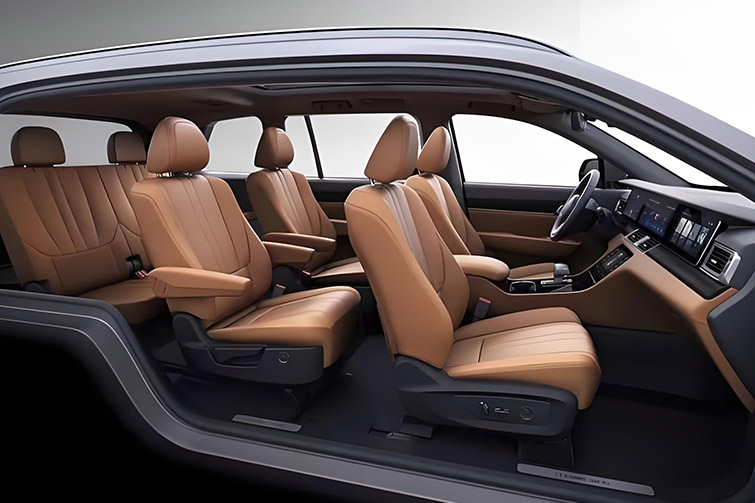
- Passenger car seats: Front row buckets, second row bench, folding third row
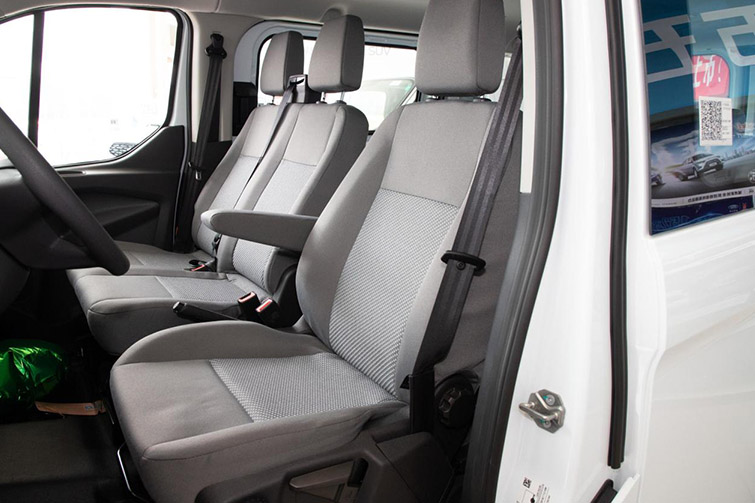
- Commercial vehicle seats: Truck cab seats, bus passenger seats, coach seating
- Construction machinery seats: Off-road equipment with vibration-dampening requirements
- Powersports seats: ATV and UTV seats with special durability and weather resistance needs
- Forklift and warehouse vehicle seats: Compact designs with enhanced durability for industrial use
Each application has unique requirements. A manufacturer that specializes in one sector may not be the right fit for another. Make sure your supplier’s portfolio aligns with your application.
The Supply Chain Reality: Why Domestic Sourcing Isn’t Always the Answer
With ongoing supply chain disruptions and tariff uncertainties, many automotive companies are reassessing their sourcing strategies. Chinese automotive seat frame manufacturers offer several advantages:
- Competitive pricing without sacrificing quality when properly vetted
- Mature tooling infrastructure with faster ramp-up for new programs
- Scalable production capacity that can flex with your volume requirements
- IATF 16949 certified facilities with documented quality systems meeting global standards
The key is finding a manufacturer with documented experience serving international OEMs — not just domestic Chinese customers. Ask for case studies, sample quality data, and references from international customers.
How to Evaluate a Potential Seat Frame Supplier
Before placing an order, conduct a structured evaluation:
- Request a facility tour or virtual audit. Quality systems are visible on the shop floor.
- Ask for IATF 16949 certificate and verify it against the registrar’s database.
- Review their quality manual and APQP (Advanced Product Quality Planning) process.
- Request sample parts for dimensional and functional testing.
- Check their PPAP experience — Level 3 PPAP documentation is the industry standard.
- Verify their export experience — packaging, logistics, and customs documentation for international shipments.
FAQ
Q1: What is the typical lead time for automotive seat frame production?
Lead times vary by order volume and complexity, but most manufacturers quote 4-8 weeks for production after tooling approval. For new programs with custom tooling, plan for 12-16 weeks total from order placement to first article delivery.
Q2: How do I ensure quality consistency across high-volume orders?
Ask about the manufacturer’s SPC (Statistical Process Control) program. Look for suppliers who run CMM checks on every batch, maintain Pareto charts for defect categories, and have documented escalation procedures when out-of-tolerance conditions occur.
Q3: Can seat frame manufacturers support both prototyping and mass production?
Yes. The best automotive seat frame manufacturers offer low-volume prototyping runs, engineering support during design development, and seamless scale-up to high-volume production — all under one roof. This reduces handoff risk and accelerates time-to-market.
Visit www.zsjinxin.com for a free consultation on seat component sourcing.
Related Posts